Buy gamedom.eu ?
We are moving the project
gamedom.eu .
Are you interested in purchasing the domain
gamedom.eu ?
domain@kv-gmbh.de · 0541-91531010
Buy gamedom.eu ?
What are conjunctional clauses, relative clauses, demonstrative clauses, and infinitive clauses?
Conjunctional clauses are dependent clauses that are introduced by a conjunction, such as "because," "although," or "while." They provide additional information about the main clause in a sentence. Relative clauses are also dependent clauses that provide more information about a noun in the main clause. They are introduced by relative pronouns like "who," "which," or "that." Demonstrative clauses are dependent clauses that function as adjectives and provide more information about a noun in the main clause. They are introduced by demonstrative pronouns like "this," "that," "these," or "those." Infinitive clauses are dependent clauses that are formed with an infinitive verb (to + base form of the verb). They can function as nouns, adjectives, or adverbs in a sentence. **
Are conjunctive clauses always adverbial clauses?
No, conjunctive clauses are not always adverbial clauses. While adverbial clauses are a type of conjunctive clause that function as adverbs to modify verbs, adjectives, or other adverbs, there are also other types of conjunctive clauses. For example, there are conjunctive clauses that function as noun clauses, such as in "I know that you are busy." In this sentence, "that you are busy" is a conjunctive clause functioning as a noun clause, not an adverbial clause. Therefore, conjunctive clauses can serve various grammatical functions beyond just adverbial clauses. **


Similar search terms for Clauses
Top-Angebote
Products related to Clauses:
-
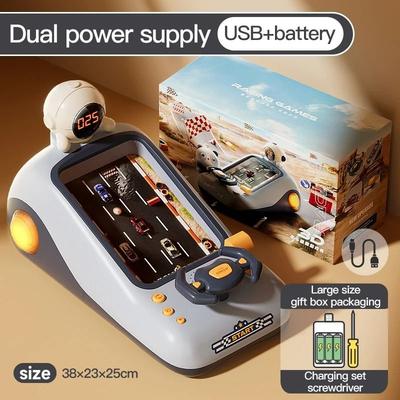
Uplift Picks Kids Steering Wheel Toy Racing Simulation Adventure Learning Game Kids Steering Wheel Toy Racing Simulation Adventure Learning GameLet little drivers take the wheel with this exciting kids steering wheel toy designed for immersive pretend play. This engaging racing simulation toy for children brings lights, sounds, and interactive challenges together for a realistic driving...210,00 $*Shipping: 0,00 $Secure redirect to the provider
-
Bethesda Deathloop PS5 Game First Person Shooter Action AdventureDescription Deathloop is an action-packed first-person shooter developed by Arkane Studios and published by Bethesda. Designed for PlayStation 5, the game combines fast-paced gunplay with supernatural abilities, stealth, exploration and a unique time-loop storyline. Players take on the role of Colt, an assassin trapped on the mysterious island of Blackreef. Colt is caught in a repeating time loop and must eliminate a group of powerful targets known as Visionaries before the day resets. The game encourages players to explore different areas, experiment with weapons and abilities, and discover information that can be used to change the course of the loop. Players can approach objectives using stealth, direct combat or a combination of different abilities and strategies. Deathloop features a distinctive visual style and a story-driven campaign with a strong emphasis on experimentation and replayability. The PlayStation 5 version takes advantage of fast loading, advanced visual effects, 3D audio and DualSense controller features for an immersive experience.29,49 £*Shipping: 0,00 £Secure redirect to the provider
-
Piccadilly Press Shockwave by Wilbur Smith – Jack Courtney Action Adventure NovelOn the pretext of making a film for his mother's environmental protection work, Jack wangles an expedition to the Arctic with his friends Amelia and Xander and cousin Caleb. But Xander's investigations into the mysterious backers funding their adventure raises Jack's suspicions. Is the renewable energy investment company really as environmentally responsible as it claims to be? While sledding with dogs, ice fishing, driving snowmobiles and sleeping in a self-made igloo, accidents beset them. Then disaster strikes when Caleb takes on a pack of wolves. Can Jack really trust his mother's friend Jonny Armfield to come to their help, or is he part of the problem?3,49 £*Shipping: 1,99 £Secure redirect to the provider



-
What are relative clauses and conjunctional clauses?
Relative clauses are clauses that provide additional information about a noun in the main clause. They are introduced by relative pronouns such as "who," "which," "that," and "whom." For example, in the sentence "The book that I read is very interesting," the relative clause "that I read" provides more information about the noun "book." Conjunctional clauses, on the other hand, are clauses that are connected to the main clause by conjunctions such as "and," "but," "or," "if," and "because." They can express relationships such as addition, contrast, alternative, condition, and cause. For example, in the sentence "I will go to the park if the weather is nice," the conjunctional clause "if the weather is nice" expresses a condition for the action in the main clause. **
-
What are the French conditional clauses (si-clauses)?
French conditional clauses, also known as si-clauses, are used to express a hypothetical situation and its potential outcome. They consist of two parts: the si clause (if clause), which describes the condition, and the main clause, which describes the potential result. The si clause is typically formed using the conjunction "si" followed by the imperfect tense or the pluperfect tense, while the main clause is formed using the conditional tense. These clauses are commonly used to talk about what would happen in certain situations if a specific condition were met. **
-
How can main clauses and subordinate clauses be recognized?
Main clauses can be recognized by their ability to stand alone as complete sentences, containing a subject and a predicate. Subordinate clauses, on the other hand, cannot stand alone as complete sentences and are dependent on the main clause for their meaning. They often begin with subordinating conjunctions such as "because," "although," "while," or "if." Additionally, subordinate clauses often function as adverbial, adjectival, or nominal clauses, providing additional information about the main clause. **
-
How can subordinate clauses be rewritten as main clauses?
Subordinate clauses can be rewritten as main clauses by removing the subordinating conjunction and making any necessary adjustments to the verb tense or word order. For example, the subordinate clause "because she was tired" can be rewritten as the main clause "she was tired." This transformation allows the subordinate clause to stand alone as a complete sentence. Additionally, any pronouns or other words that were dependent on the subordinating conjunction may need to be adjusted to ensure the new main clause is grammatically correct. **

How can one recognize main clauses and subordinate clauses?
Main clauses can stand alone as complete sentences, while subordinate clauses cannot. Subordinate clauses often begin with subordinating conjunctions such as "although," "because," "if," "when," or "while." They also often contain a subject and a verb, but they do not express a complete thought on their own. Main clauses, on the other hand, express a complete thought and can function as independent sentences. By identifying these characteristics, one can recognize main and subordinate clauses in a sentence. **
How can adverbial clauses be used as subordinate clauses?
Adverbial clauses can be used as subordinate clauses to provide additional information about the main clause. They can modify the verb in the main clause by expressing time, place, manner, condition, reason, purpose, or concession. For example, in the sentence "She went to bed after she finished her homework," the adverbial clause "after she finished her homework" provides information about the timing of the main action "She went to bed." Adverbial clauses are introduced by subordinating conjunctions such as after, before, while, since, because, if, although, etc. **
Top-Angebote
Products related to Clauses:
-
Enesco/Dept 56 More Letters for the Clauses Clothtique Red , RedEvery year, Mr. and Mrs. Claus are eager to receive and read More Letters for the Clauses. The red mailbox has holiday accents including holly leaves, red berries, and a red bow; it is filled with wrapped packages and rolled-up letters. This happy...149,99 $*Shipping: 20,95 $Secure redirect to the provider
-
Enesco/Dept 56 More Letters for the Clauses African American Clothtique Red , RedEvery year, Mr. and Mrs. Claus are eager to receive and read More Letters for the Clauses. The red mailbox has holiday accents including holly leaves, red berries, and a red bow; it is filled with wrapped packages and rolled-up letters. This happy,...149,99 $*Shipping: 20,95 $Secure redirect to the provider
-
Uplift Picks Kids Steering Wheel Toy Racing Simulation Adventure Learning Game Kids Steering Wheel Toy Racing Simulation Adventure Learning GameLet little drivers take the wheel with this exciting kids steering wheel toy designed for immersive pretend play. This engaging racing simulation toy for children brings lights, sounds, and interactive challenges together for a realistic driving...210,00 $*Shipping: 0,00 $Secure redirect to the provider
-
What are conjunctional clauses, relative clauses, demonstrative clauses, and infinitive clauses?
Conjunctional clauses are dependent clauses that are introduced by a conjunction, such as "because," "although," or "while." They provide additional information about the main clause in a sentence. Relative clauses are also dependent clauses that provide more information about a noun in the main clause. They are introduced by relative pronouns like "who," "which," or "that." Demonstrative clauses are dependent clauses that function as adjectives and provide more information about a noun in the main clause. They are introduced by demonstrative pronouns like "this," "that," "these," or "those." Infinitive clauses are dependent clauses that are formed with an infinitive verb (to + base form of the verb). They can function as nouns, adjectives, or adverbs in a sentence. **
-
Are conjunctive clauses always adverbial clauses?
No, conjunctive clauses are not always adverbial clauses. While adverbial clauses are a type of conjunctive clause that function as adverbs to modify verbs, adjectives, or other adverbs, there are also other types of conjunctive clauses. For example, there are conjunctive clauses that function as noun clauses, such as in "I know that you are busy." In this sentence, "that you are busy" is a conjunctive clause functioning as a noun clause, not an adverbial clause. Therefore, conjunctive clauses can serve various grammatical functions beyond just adverbial clauses. **
-
What are relative clauses and conjunctional clauses?
Relative clauses are clauses that provide additional information about a noun in the main clause. They are introduced by relative pronouns such as "who," "which," "that," and "whom." For example, in the sentence "The book that I read is very interesting," the relative clause "that I read" provides more information about the noun "book." Conjunctional clauses, on the other hand, are clauses that are connected to the main clause by conjunctions such as "and," "but," "or," "if," and "because." They can express relationships such as addition, contrast, alternative, condition, and cause. For example, in the sentence "I will go to the park if the weather is nice," the conjunctional clause "if the weather is nice" expresses a condition for the action in the main clause. **
-
What are the French conditional clauses (si-clauses)?
French conditional clauses, also known as si-clauses, are used to express a hypothetical situation and its potential outcome. They consist of two parts: the si clause (if clause), which describes the condition, and the main clause, which describes the potential result. The si clause is typically formed using the conjunction "si" followed by the imperfect tense or the pluperfect tense, while the main clause is formed using the conditional tense. These clauses are commonly used to talk about what would happen in certain situations if a specific condition were met. **
Similar search terms for Clauses
-
Bethesda Deathloop PS5 Game First Person Shooter Action AdventureDescription Deathloop is an action-packed first-person shooter developed by Arkane Studios and published by Bethesda. Designed for PlayStation 5, the game combines fast-paced gunplay with supernatural abilities, stealth, exploration and a unique time-loop storyline. Players take on the role of Colt, an assassin trapped on the mysterious island of Blackreef. Colt is caught in a repeating time loop and must eliminate a group of powerful targets known as Visionaries before the day resets. The game encourages players to explore different areas, experiment with weapons and abilities, and discover information that can be used to change the course of the loop. Players can approach objectives using stealth, direct combat or a combination of different abilities and strategies. Deathloop features a distinctive visual style and a story-driven campaign with a strong emphasis on experimentation and replayability. The PlayStation 5 version takes advantage of fast loading, advanced visual effects, 3D audio and DualSense controller features for an immersive experience.29,49 £*Shipping: 0,00 £Secure redirect to the provider
-
Piccadilly Press Shockwave by Wilbur Smith – Jack Courtney Action Adventure NovelOn the pretext of making a film for his mother's environmental protection work, Jack wangles an expedition to the Arctic with his friends Amelia and Xander and cousin Caleb. But Xander's investigations into the mysterious backers funding their adventure raises Jack's suspicions. Is the renewable energy investment company really as environmentally responsible as it claims to be? While sledding with dogs, ice fishing, driving snowmobiles and sleeping in a self-made igloo, accidents beset them. Then disaster strikes when Caleb takes on a pack of wolves. Can Jack really trust his mother's friend Jonny Armfield to come to their help, or is he part of the problem?3,49 £*Shipping: 1,99 £Secure redirect to the provider
-
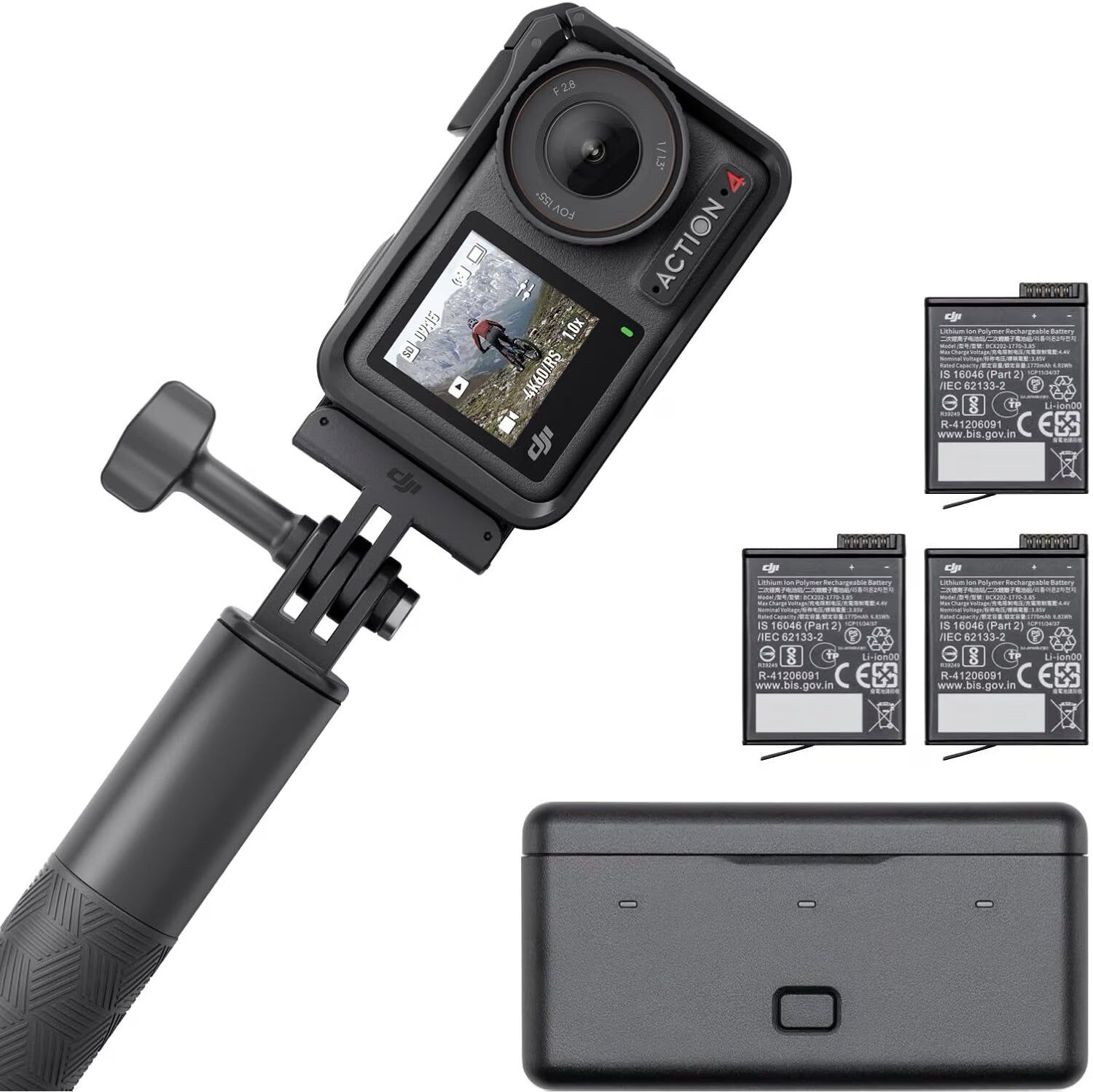
DJI Osmo Action 4 Adventure Combo – 4K/120fps Action Camera, 1/1.3" Sensor, 3 Batteries & 1.5m Extension Rod, New.gadcet-pdp{--g-green:#00a651;color:#1f2430;line-height:1.55;font-size:inherit;max-width:760px}.gadcet-pdp>*:first-child{margin-top:0}.gadcet-pdp p{margin:0 0.9em}.gadcet-pdp h3{font-size:1.05em;font-weight:600;color:#11161f;margin:1.4em 0.5em;padding-left:.5em;border-left:3px solid var(--g-green);border-radius:0;line-height:1.3}.gadcet-pdp ul{list-style:none!important;margin:0 0.9em;padding:0!important}.gadcet-pdp ul li{position:relative;padding:.1em 0.1em 1.5em;margin:0}.gadcet-pdp ul li::before{content:"";position:absolute;left:.16em;top:.45em;width:.36em;height:.66em;border:solid var(--g-green);border-width:0.14em.14em 0;transform:rotate(45deg)}.gadcet-pdp table{width:100%;border-collapse:collapse;margin:.3em 0 1em;font-size:.95em;border:1px solid #e7e9ee!important;border-radius:8px;overflow:hidden}.gadcet-pdp table td{padding:.5em.8em;border-bottom:1px solid #eef0f4!important;vertical-align:top}.gadcet-pdp table tr:last-child td{border-bottom:0!important}.gadcet-pdp table tr:nth-child(even){background:#f7f9f8}.gadcet-pdp table td:first-child{font-weight:600;color:#454c59;width:40%}@media (max-width:600px){.gadcet-pdp table td:first-child{width:42%}} Capture your favourite adventures in stunning 4K with the DJI Osmo Action 4. Its large sensor, 120fps video and rock-solid stability deliver vivid, smooth footage in all conditions. Key Features 4K UHD video at up to 120fps, plus 1080p/240fps for up to 8x slow motion Large 1/1.3-inch CMOS sensor with 2.4μm-equivalent pixels and f/2.8 aperture Ultra-wide 155° field of view RockSteady 3.0, RockSteady 3.0+ and HorizonBalancing information 360° HorizonSteady keeps the horizon level 10-bit D-Log M colour for professional grading Dedicated colour-temperature sensor for accurate white balance Three Osmo Action Extreme Batteries and a multifunctional battery case 1.5m extension rod included for creative angles Benefits Stabilisation smooths out shakes for high-motion shooting Low‑light performance captures clear detail after sunset or in shade Extended battery life powers all‑day adventures Wide FOV frames landscapes and action views without stepping back Quick charging gets you back shooting sooner Specifications Sensor 1/1.3-inch CMOS Effective Pixels 2.4μm-equivalent Aperture f/2.8 Field of View 155° maximum Max Video Resolution 4K UHD (3840 × 2160) Max Frame Rates 4K/120fps, 1080p/240fps Colour Modes 10-bit D-Log M Stabilisation RockSteady 3.0, RockSteady 3.0+, HorizonBalancing, 360° HorizonSteady Battery Capacity 1770mAh per battery Battery Life Up to 160 minutes (1080p/24fps) Operating Temperature -20°C to 45°C Charging Time 80% in 18 minutes (with 30W charger) What You'll Receive The DJI Osmo Action 4 Adventure Combo includes the action camera, three Osmo Action Extreme Batteries, a multifunctional Battery Case and a 1.5m Extension Rod. Choose your preferred condition from the options above – available in New and various Used grades. Ideal For Perfect for outdoor adventurers, sports enthusiasts,...289,00 £*Shipping: 0,00 £Secure redirect to the provider
-
Friendly Fresh Finds Electric Puzzle Train Racing Rail Car Model Educational Toy Children Track Car Jigsaw Toy Adventure Brain Interactive Game redIgnite your child's imagination with this electric puzzle train racing car model. Designed for young minds, this interactive educational toy combines fun with learning. As children build their track and race the car, they improve problemsolving...34,97 $*Shipping: 0,00 $Secure redirect to the provider
-
How can main clauses and subordinate clauses be recognized?
Main clauses can be recognized by their ability to stand alone as complete sentences, containing a subject and a predicate. Subordinate clauses, on the other hand, cannot stand alone as complete sentences and are dependent on the main clause for their meaning. They often begin with subordinating conjunctions such as "because," "although," "while," or "if." Additionally, subordinate clauses often function as adverbial, adjectival, or nominal clauses, providing additional information about the main clause. **
-
How can subordinate clauses be rewritten as main clauses?
Subordinate clauses can be rewritten as main clauses by removing the subordinating conjunction and making any necessary adjustments to the verb tense or word order. For example, the subordinate clause "because she was tired" can be rewritten as the main clause "she was tired." This transformation allows the subordinate clause to stand alone as a complete sentence. Additionally, any pronouns or other words that were dependent on the subordinating conjunction may need to be adjusted to ensure the new main clause is grammatically correct. **
-
How can one recognize main clauses and subordinate clauses?
Main clauses can stand alone as complete sentences, while subordinate clauses cannot. Subordinate clauses often begin with subordinating conjunctions such as "although," "because," "if," "when," or "while." They also often contain a subject and a verb, but they do not express a complete thought on their own. Main clauses, on the other hand, express a complete thought and can function as independent sentences. By identifying these characteristics, one can recognize main and subordinate clauses in a sentence. **
-
How can adverbial clauses be used as subordinate clauses?
Adverbial clauses can be used as subordinate clauses to provide additional information about the main clause. They can modify the verb in the main clause by expressing time, place, manner, condition, reason, purpose, or concession. For example, in the sentence "She went to bed after she finished her homework," the adverbial clause "after she finished her homework" provides information about the timing of the main action "She went to bed." Adverbial clauses are introduced by subordinating conjunctions such as after, before, while, since, because, if, although, etc. **
* All prices are inclusive of VAT and, if applicable, plus shipping costs. The offer information is based on the details provided by the respective shop and is updated through automated processes. Real-time updates do not occur, so deviations can occur in individual cases. ** Note: Parts of this content were created by AI.